Untether Advisory
Build leadership and sales teams that perform without depending on you.
We help growing companies improve leadership, sales and people capability, creating more consistent performance without everything depending on founders, senior leaders or a handful of top performers.
Remove constraints.
Build capability.
Drive performance.
Where we work
Three places performance gets tethered.
Leadership Performance
Decisions that stop travelling upwards, and senior time released from work managers should own. Sometimes the cause is capability. Sometimes managers have never been given the authority, the expectations or the performance information to decide well. We establish which, then develop the managers and the conditions around them until the standard holds without you in the room.
DetailRevenue Performance
Strong commercial performance made repeatable across the team, rather than resting on two or three people. We find where revenue is actually leaking: pipeline creation, conversation quality, conversion, process or the management of the team doing it. Then we develop the capability, coaching and measurement that turns what your best people do instinctively into how the team sells.
DetailPeople & Capability
Knowledge, standards and judgement that belong to the business rather than to a handful of individuals. Senior people leadership on a fractional basis: capability strategy tied to the commercial plan, pathways, measurement and one owner for the decisions, at the size you are heading for rather than the size you were.
DetailSenior involvement isn't the problem. Senior dependency is.
Senior leaders should be in the work wherever their judgement, expertise or authority genuinely adds value. The problem starts when performance repeatedly requires them: when a deal cannot close, a decision cannot be made or a client cannot be kept without the same few people in the room. That is not senior involvement. It is capability, authority and knowledge that were never built anywhere else, and it caps growth at the capacity of your busiest people.
He had built a twelve-person sales team.
He was still in every deal that mattered.
That is not a sales problem. It is a dependency. The team was hired to create capacity, but nobody ever moved the ability to run a serious commercial conversation out of the founder's head, so the number still runs through one diary. Add people to a business that has not passed on how the work is done and you buy cost, not output.
One we see all the time
How an engagement works
The problem you can see is where we start, not where we stop.
Diagnosing before prescribing is not a formality. It is what stops you paying for the wrong solution: a training programme for what turns out to be an accountability problem, or three more salespeople when the existing team converts half of what it should. You buy a defined project against one clear performance outcome, with the problem, the measure and the scope agreed before work begins.
01
Diagnose
We start with the performance problem you can see, then establish what is actually causing it, what else it is affecting and what the business is quietly dependent on. You find out where intervention will move performance most, and where money would be wasted.
02
Prescribe
The diagnosis becomes a Performance Project with one clear performance objective, usually 6–12 weeks. Focused does not mean narrow: it addresses every connected cause the objective depends on, and you are buying the outcome rather than a count of days.
03
Implement
We make the change happen: developing managers and commercial teams, and putting the coaching, tools, operating rhythms, accountabilities and measures in place that the diagnosis calls for. Performance starts moving during the project, not in a report at the end.
04
Embed
Gains hold when someone keeps measuring them. An optional Embedded Partnership sustains the standard, stops old dependencies returning, keeps developing capability and surfaces the next constraint early. A single project can stand alone: this follows only when it will earn its place.
How we think about it
Performance changes when behaviour changes. Everything else is just activity.
We start from how people actually decide under pressure, incentive and habit, rather than how the org chart says they should. Every piece of work names the behaviour that has to change, what is currently keeping it in place, and the number it should move.
Behaviour is the unit of performance
Revenue, retention and delivery are what is left behind by thousands of small decisions. Change the decisions and the numbers move. Nothing else moves them.
People are predictably irrational
Incentives, defaults, framing, loss aversion, social proof, friction. This is why capable people keep doing the unproductive thing, and what actually gets them to stop.
Change the setting, not the slides
Behaviour rarely fails in the training room. It fails back at the desk. So we change the cues, the reinforcement and the measurement around the work itself.
A bad system will beat a good person every time.
W. Edwards Deming
When performance slips, training is often the first prescription. Sometimes capability is the problem. Sometimes the system around capable people makes good performance unnecessarily difficult. We diagnose which before recommending either — because developing people cannot fix a broken process, unclear accountability or the wrong incentives.
Who we work with
Where the margin sits in people, not product.
SaaS & Technology · Financial Services · Fintech · Consulting & Advisory · Recruitment & Staffing
Businesses where growth, revenue and client delivery all come down to how good the managers, leaders and the people carrying the number actually are.
- Managers promoted faster than they were developed.
- Growth opening gaps faster than the structure can close them.
- Development activity that isn't changing performance.
- People capability needs senior attention before it needs another senior hire.
What is performance tethered to?
People problems become performance problems.
- Important deals that still need senior intervention.
- Decisions that keep travelling upwards.
- A handful of people carrying the knowledge everyone else needs.
- Headcount growing faster than output.
If losing one person would materially damage performance, that is not a retention risk. It is a capability gap.
Retention plans protect the individual. They do nothing about the reason the business is exposed in the first place: knowledge, judgement and commercial instinct that live in a person rather than in the organisation. The test is simple. Name what stops working if your strongest performer resigns tomorrow, and you have named the constraint we work on.
Founder
Rich Benson
Founder & Chief Development Officer
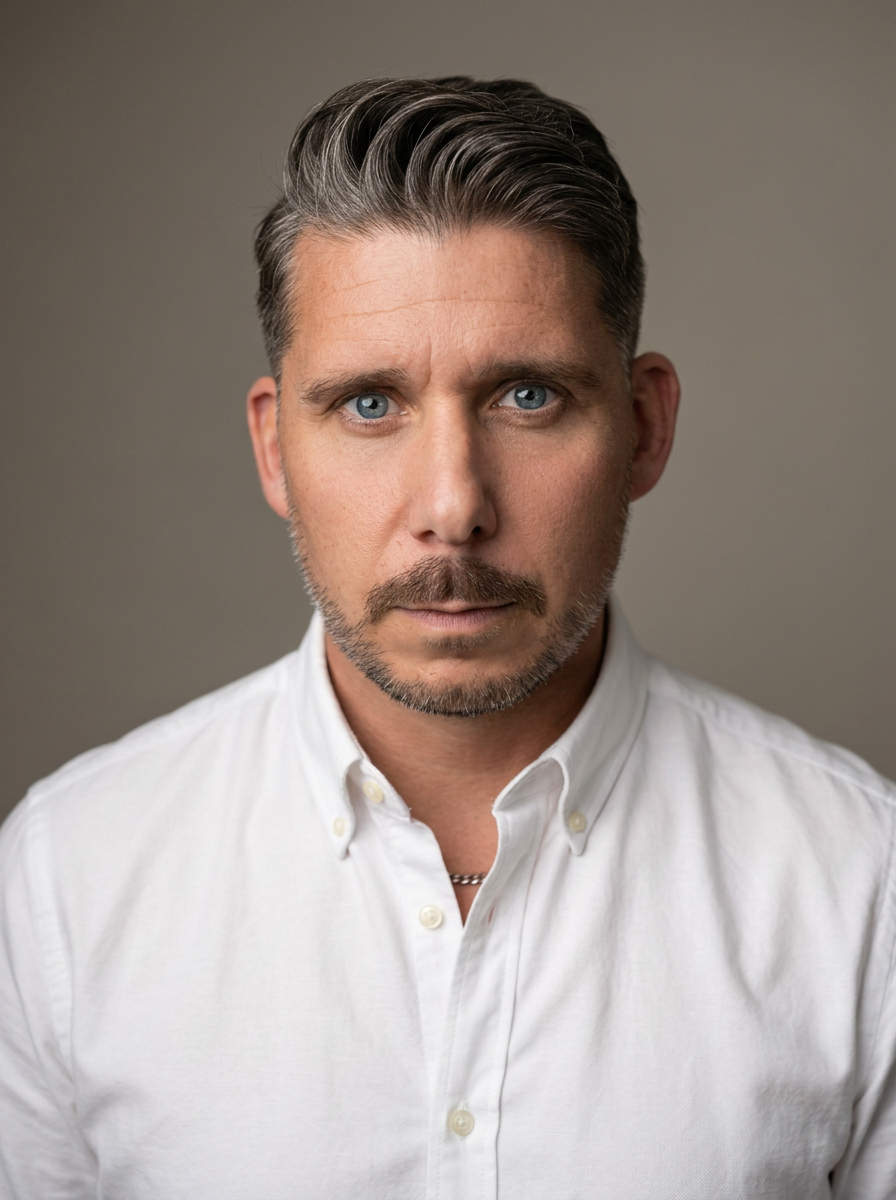
Untether is founder-led by Rich Benson. Fifteen years spent developing performers in FTSE 100 businesses, scale-ups and start-ups, mostly in leadership and commercial roles where the number was his responsibility too.
That is the point. Capability is not a separate agenda from commercial performance. It is the same agenda, measured later. We name what performance is dependent on first and choose the intervention second, including when the honest answer is that capability is not the constraint.
More about UntetherInsights
Latest thinking
3 September 2026 · 12 min read
Your best coach might actually be a problem
If coaching quality depends entirely on the manager, you haven't built a coaching system.
30 July 2026 · 13 min read
Nobody wants to use your LMS
This is not necessarily a problem.
25 June 2026 · 12 min read
Your managers are probably your real learning system
What happens after the training usually matters more than what happens in the training.
Tell us what needs to perform better.
You will leave the first conversation with a clear read on what is causing the gap and whether Untether is the right practice to remove it. If capability is not the constraint, you hear that from us first.